

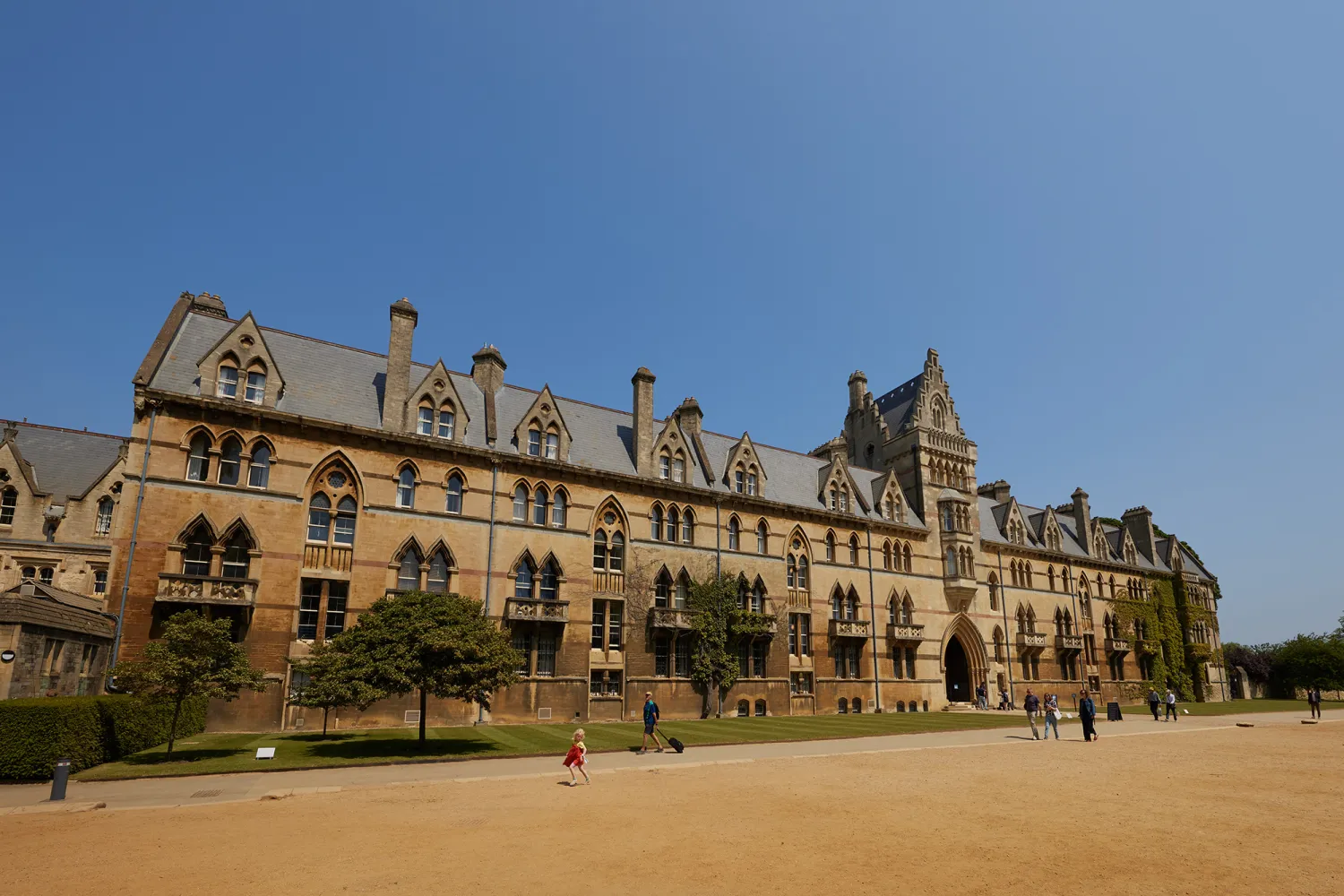
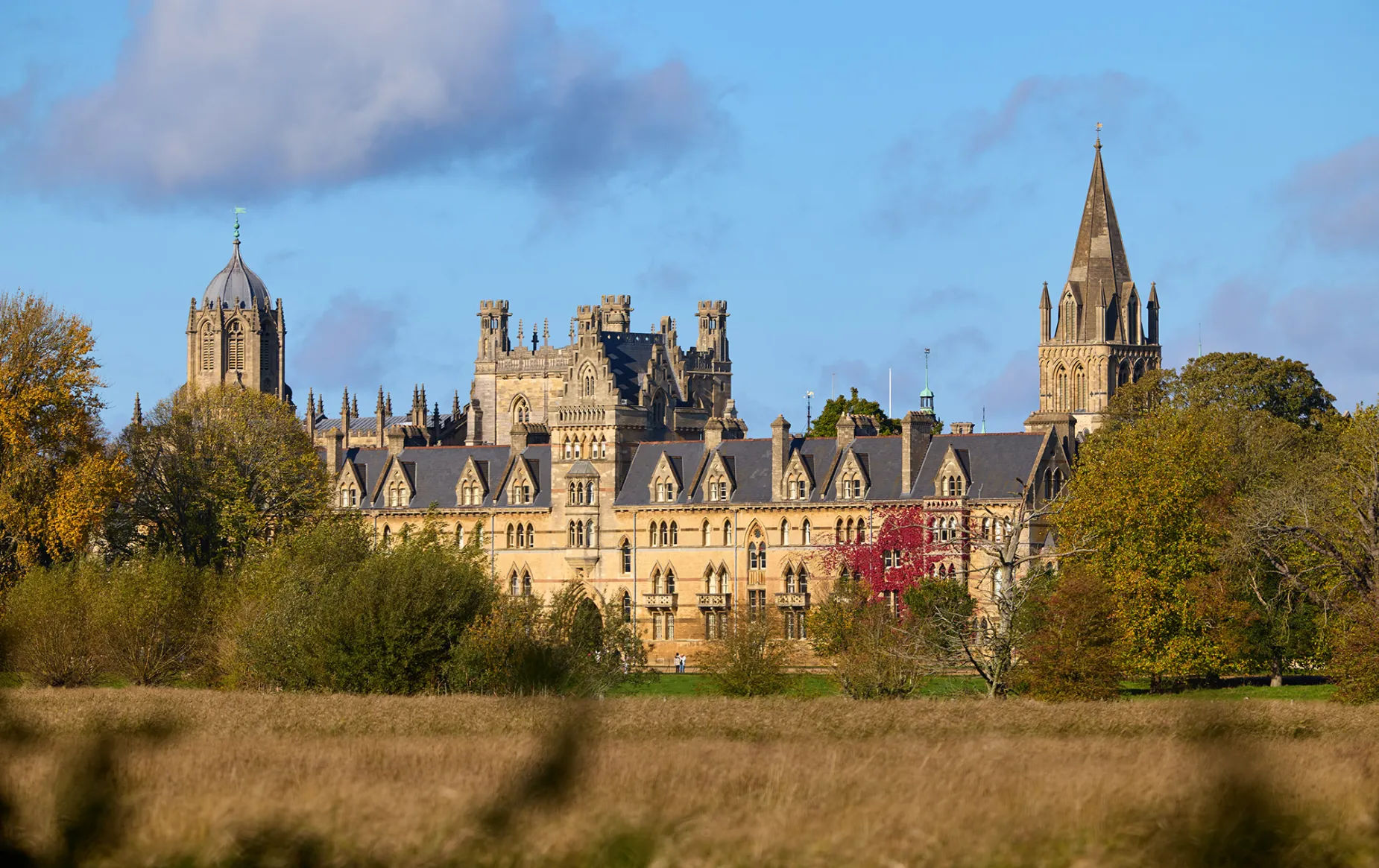
For over 100 years, the area directly in front of the 19th-century Meadow Building – a familiar sight to hundreds of thousands of annual visitors and city residents – has been maintained as a formal lawn. While visually neat, such lawns typically lack biodiversity and require intensive maintenance. A new initiative seeks to reimagine this space, bringing it more into harmony with Christ Church Meadow itself, a historic floodplain meadow known for its rich mix of grasses and wildflowers.
From lawn to life: new project brings biodiversity to an Oxford landmark
The lawns in front of the Meadow Building are to be transformed into a wildflower meadow, in a project developed with King’s College, Cambridge. The initiative will bring greater biodiversity and colour to one of Oxford's most recognisable spaces.
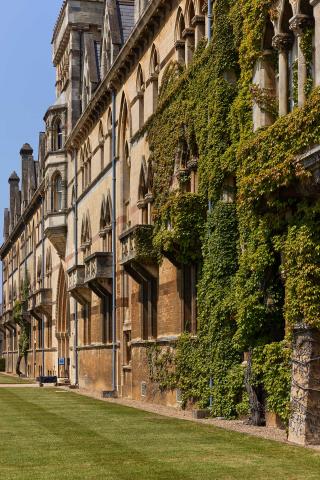
The change reflects a broader shift in how historic landscapes are managed. Across Oxford and Cambridge, institutions are reconsidering the role of traditional lawns, which can be resource intensive to maintain. At Christ Church, the existing lawn presents particular challenges. ‘It’s very resource hungry,’ says Christ Church Head Gardener Steve Howes. ‘We have to use a lot of fertiliser, a lot of mowing. It’s also a very exposed site, so we have a lot of weeds that self-seed. During the summer it gets really dry and burnt.’
In line with Christ Church’s environmental policy, lawns are not watered during the summer months, which can leave the grass parched and brown. Faced with the choice of introducing irrigation or rethinking the planting scheme, the Gardens team opted for a more sustainable solution. ‘The other option we had was to introduce a wildflower meadow which is far less resource hungry,’ Steve explains. ‘Basically, it means we would only be cutting it once or twice a year. It’s good for the pollinating insects, so we’re encouraging wildlife. And not only that – it just looks really attractive with all the different species of wildflowers.’
The project also aligns with wider environmental goals at Christ Church, where there is an ongoing focus on reducing chemical inputs, conserving water, and working more closely with natural processes. Wildflower meadows, once established, require significantly less intervention than formal lawns, while supporting a far greater range of species.
The ecosystem the meadow creates is phenomenal.
The ecosystem the meadow creates is phenomenal.
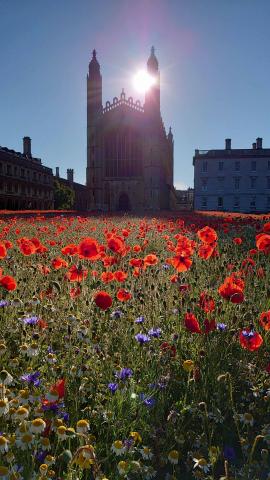
The project takes inspiration from a similar initiative King’s College, Cambridge, where part of the famous Great Lawn has been successfully converted into wildflower meadow. Steve Howes visited the college in February this year to see the meadow in winter and to learn from its development over time. There he met his counterpart, Head Gardener Steve Coghill, who has led the meadow project at King’s.
‘I was keen to understand both its seasonal appearance and the wider benefits it has brought,’ says Steve Howes. ‘Steve Coghill was very accommodating and talked me through the process from the initial concept to today’s harvesting, six years on. He spoke candidly about the challenges, but above all about the successes and the significant impact the meadow has had on wildlife and the local Cambridge community. As Steve put it, the ecosystem the meadow creates is phenomenal.’
Steve Howes will return to Cambridge in the summer to learn more from his King’s counterpart. The collaboration has provided valuable practical insight into establishing and managing meadow planting in a high-profile historic setting: ‘One of the key things I took from King’s was the importance of careful soil preparation and testing, along with selecting the right seed mix,’ Steve explains. ‘The meadow has evolved over time – from that first year’s display of common poppies to a more complex mix of perennial wildflowers creating a dynamic landscape each year.’

Drawing on the advice of the King’s team, the Christ Church meadow project has begun with soil testing to determine the most appropriate seed mix. David McInnes of Origin Amenity Solutions, who carried out the analysis, explains: ‘We’ve been taking soil samples to find out the fertility of the two meadow areas that Steve is wishing to turn into wildflower meadows. Wildflowers don’t like fertile ground, so we’re trying to find out how fertile the soil was, both the topsoil and the subsoil, because some of the wildflowers root down into the subsoil.’
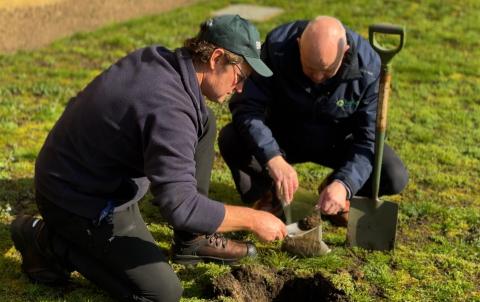
The transformation will begin in earnest in the autumn, when the existing turf is removed and the ground prepared. ‘Once we know what the soil nutrient level is, we can decide on what wildflower mix we can use,’ Steve explains. ‘In the autumn we’re going to be removing the turf and then sowing the wildflower seeds.’
The first signs of change are expected in spring 2027, when annual flowers begin to emerge. ‘In the first year, whilst it gets established, we’re going to see the annual wildflower seeds – flowers like your poppies – and then as the perennials start coming in, you’ll see things like ox-eye daisies, scabious, and that will just start bringing a nice rich colour into the meadows.’
Over time, the meadow could support dozens of plant species. ‘We could be looking at between 60 or 70 different types of wildflowers, which attracts a load of pollinating insects – your bees and your butterflies. It also attracts bats and different species of birds too, because they come for the insects,’ says Steve.
The long-term management of the meadow will also draw on traditional techniques. At the end of each summer, the grass will be cut using scythes, with help from local practitioners. ‘We’ll harvest the wildflower meadow using an old traditional method of scything,’ Steve explains. ‘This will bring in the community because we'll get the local scythers to give us a hand. And we’ll use the wildflower hay to feed the longhorn cattle.’
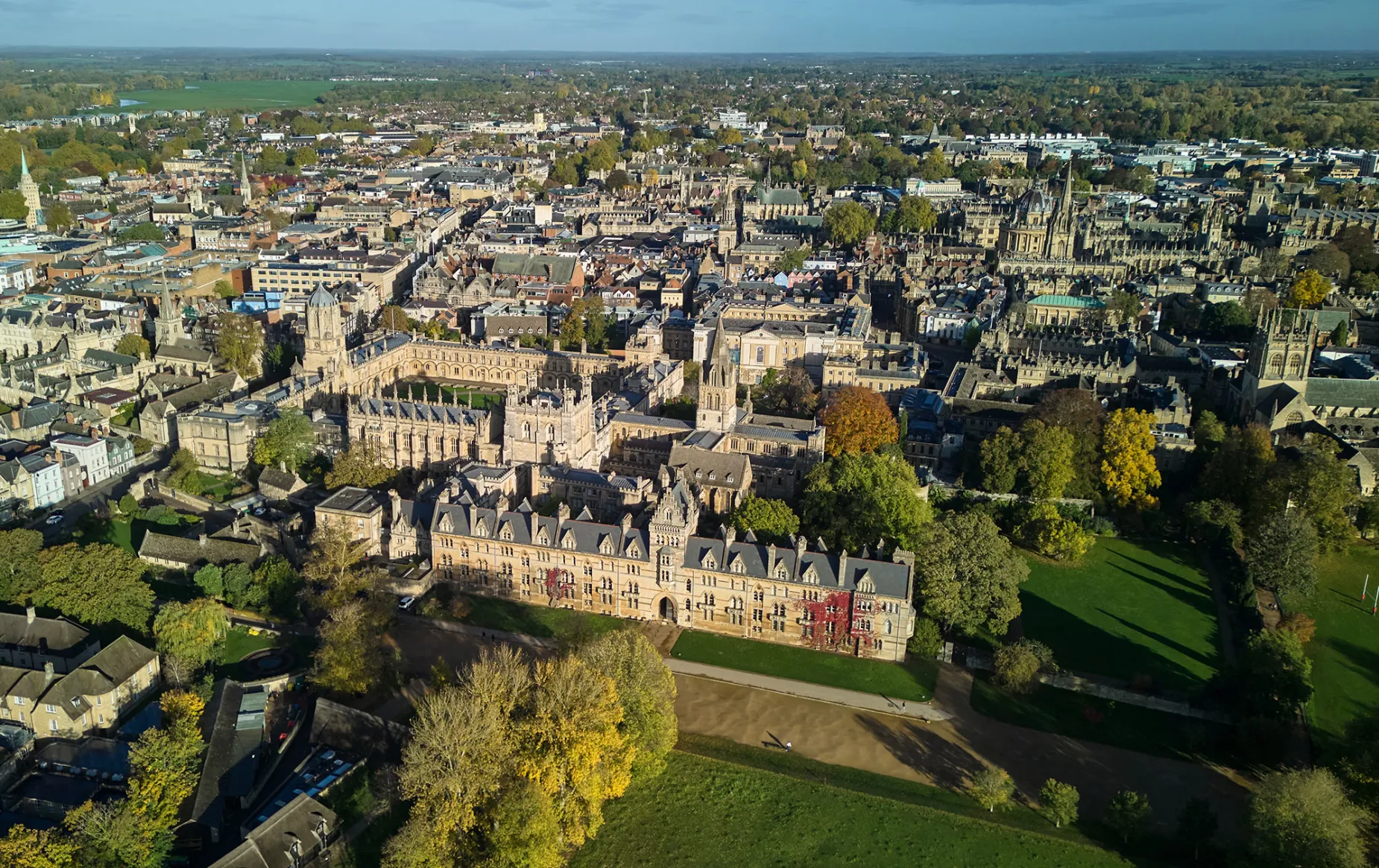
While the transformation represents a visible shift in the appearance of the Meadow Building frontage, it is rooted in a careful balance between heritage and sustainability. ‘The look and feel are going to change quite a lot,’ Steve reflects. ‘At the moment it’s quite a stark area, but with the colour and the insects and the wildlife, I think and hope it’s going to bring a lot of happiness and joy to people.’
By linking the formal lawns more closely with the ecology of Christ Church Meadow, the project marks another step in the College’s ongoing commitment to enhancing biodiversity across its historic landscape.
The College would like to thank Steve, David and the Gardens Team for their dedicated work on this project, as well as Steve Coghill and colleagues at King’s College, Cambridge for their guidance and support.