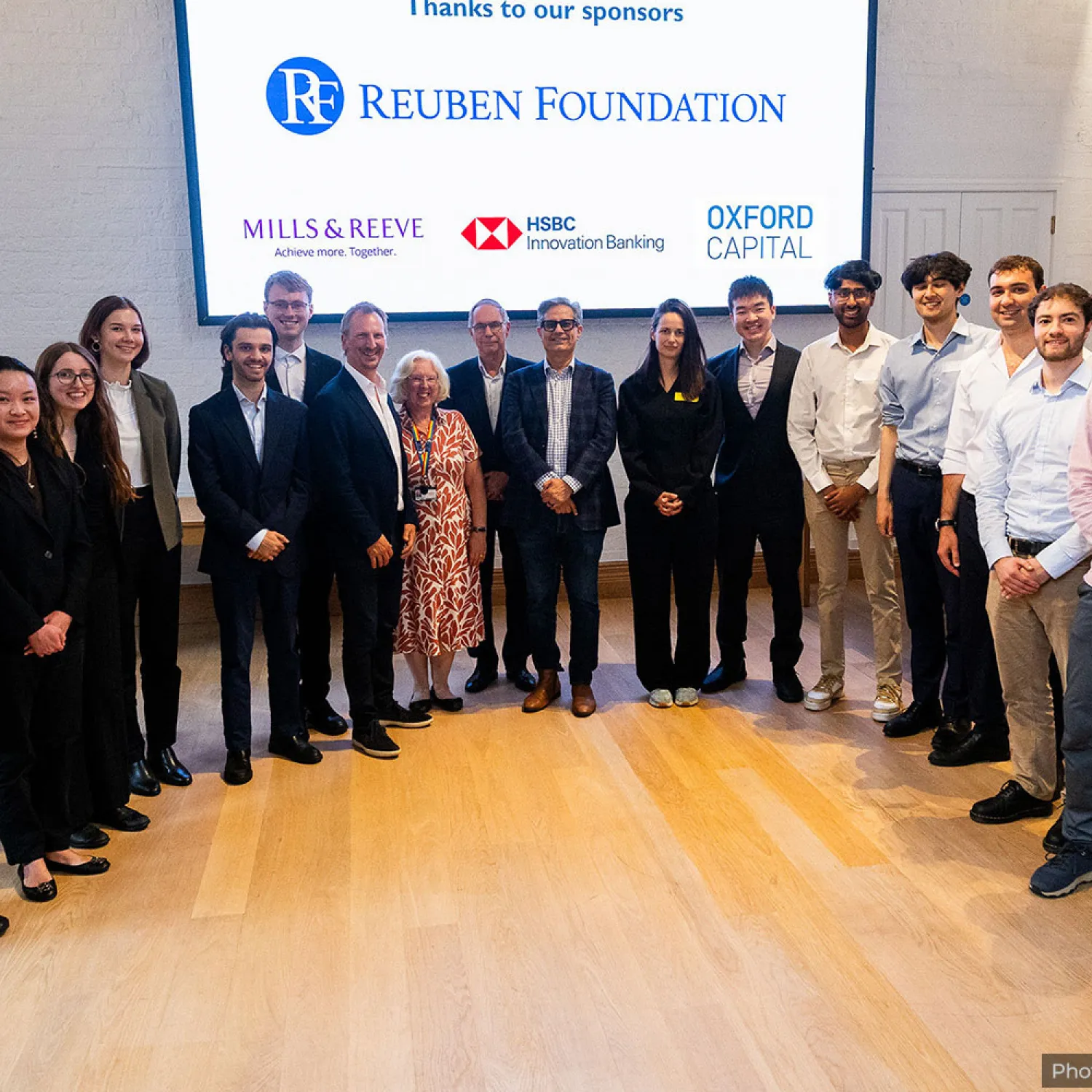

Tony Pastor discusses entrepreneurship, podcasting and risk at Christ Church
Last night, Oxford Edge and the Christ Church Entrepreneurs Circle were privileged to welcome Tony Pastor, co-founder of the UK’s leading independent podcast production company Goalhanger, to Christ Church for an evening exploring entrepreneurship, media innovation and risk.
Speaking to students and guests in the Michael Dummett Lecture Theatre, Tony reflected on his career journey from local journalism to senior roles in broadcast television, before founding Goalhanger in 2013 with Gary Lineker. Originally established as a sports documentary business, Goalhanger expanded into podcasting in 2019 and now produces some of the UK’s most successful podcasts, including The Rest Is Politics, The Rest Is Politics: US, The Rest Is History and The Rest Is Football. Collectively, the company’s output has reached hundreds of millions of listeners worldwide and surpassed one billion total lifetime streams and views as of early 2025.
Tony began by tracing his early career, describing how he was taken on as a trainee reporter by the Liverpool Echo, where he learned how to interview people and navigate challenging situations at a young age. He joined the BBC in 1995 before moving to ITV, where he spent 13 years and ultimately became Controller of Sport.
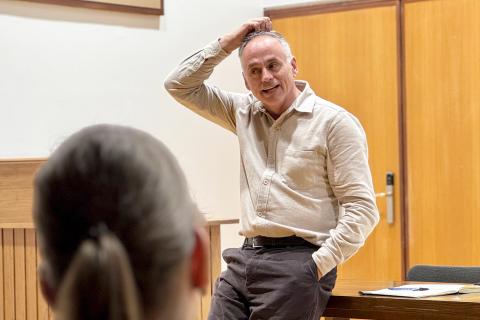
Reflecting on his decision to leave ITV, Tony explained that he had reached a point where he felt he understood how the business worked and wanted to break out of the corporate structure to build something of his own. ‘The entrepreneurial journey begins with a massive degree of risk,’ he said, noting that many people might have thought he was foolish to leave a highly paid secure role. His initial plan, he explained, was to give the venture a year, rely on savings and see whether it could succeed. After consulting with some of those he knew who had made enormous professional decisions in their own lives – Gareth Southgate and Roy Keane – Tony decided to take the leap.
Tony spoke about the early years of running a small boutique production company and the shift towards podcasting, which initially began as a side project. He described noticing gaps in the audio market – including the absence of podcasts on topics such as the Second World War that dominate the book market – and how audiences grew rapidly during the COVID pandemic, from a few thousand annual downloads to hundreds of thousands.
Discussing The Rest Is History, Tony highlighted its global reach and cultural impact, noting that after London, the next two cities with the highest download figures are Sydney and Melbourne. A British-made history podcast, Tony pointed out, has the ability to project soft power around the world, telling the true story, for instance, behind the Ukraine War and the protests in Iran. Tony also challenged assumptions about young audiences, observing that the core podcast demographic typically falls between the ages of 25 and 45. ‘This idea that young people aren’t engaging with long-form content just isn’t right,’ he stressed.
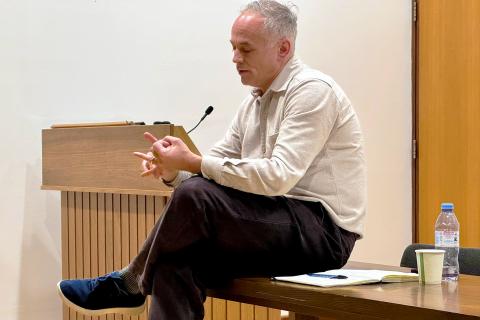
A recurring theme of the talk was the importance of talent and fair reward. Tony described Goalhanger as ‘unapologetically talent first’, arguing that audiences return primarily for the hosts rather than for the format or subject-matter. He noted that the company pays its presenters well and shares profits properly, adding that since launching its history podcast network in 2019, it has not lost a single host. ‘Casting – picking the talent – is the single most important thing we do,’ he said.
During the Q&A session, Tony addressed questions on international expansion, future projects and business strategy. He revealed plans for a new Book Club podcast, and discussed ambitions to grow audiences in the US and Canada, attract more women listeners and increase the proportion of listeners who pay for ad-free content. Even small shifts in membership, he suggested, could significantly increase the company’s value.
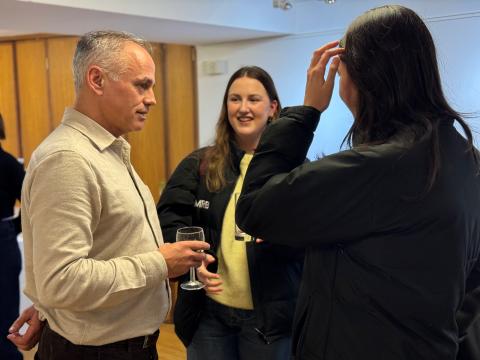
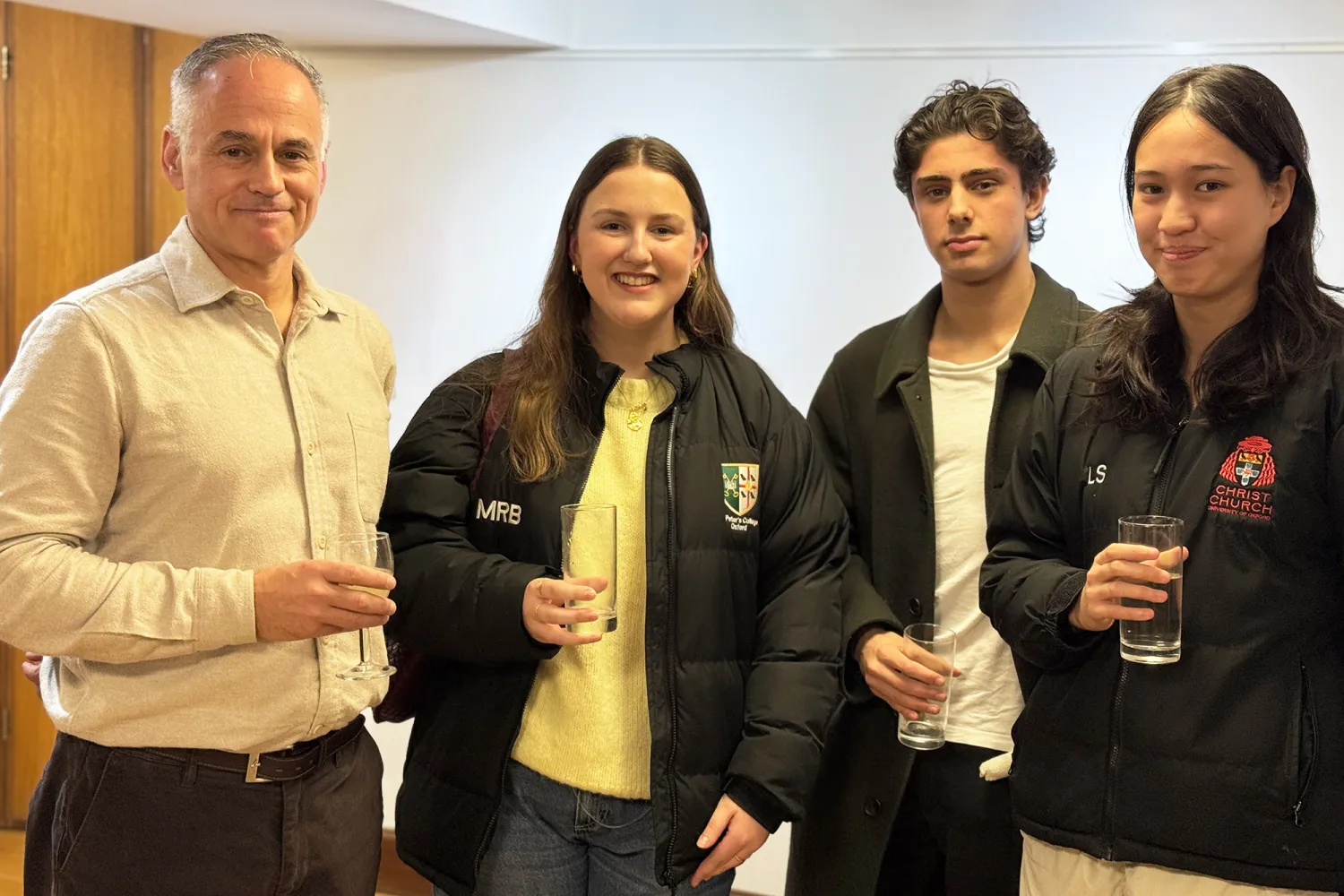
The event concluded with networking and drinks, with some guests continuing the discussion over dinner in Hall. The talk offered students valuable insight into the realities of building an independent media business, balancing creative ambition with personal risk, and navigating career transitions in a rapidly changing industry.
In 2025, its 500th anniversary year, Christ Church opened Oxford Edge – a new Centre for Entrepreneurship and Innovation at 37 St Giles in the heart of Oxford. The state-of-the-art facility educates, inspires and empowers the next generation of student entrepreneurs from across the University of Oxford, offering opportunities to develop and launch their own ideas.
Other Christ Church news