
Edge Challenges brings together Oxford DPhil and Master’s students who want to use their expertise to build something great.

You’ll join a small, interdisciplinary team, choose a challenge shaped by real stakeholders, and develop a research-informed response that has impact beyond the University. It’s an opportunity to engage with meaningful open problems and explore how your skills can make a difference.

Offered jointly by Oxford Edge, Oxford Science Enterprises, and the Skoll Centre for Social Entrepreneurship, the programme brings together three distinct parts of Oxford’s venture ecosystem: student entrepreneurship, world-changing science and technology, and systemic social impact. 

We curate a set of challenges with partners across Oxford’s innovation and impact communities. The challenges themselves span the disciplines, ensuring each participant can work on a problem that genuinely interests them - whether that means something technically complex, socially rooted, or at the intersection of both.

You might find yourself working on:

  • Science and technology problems across healthcare, AI and engineering.
  • Social issues sourced with community, public, and business partners.
  • Global and local questions that benefit from interdisciplinary thinking.

You choose the challenge that interests you — any participant can work in any area.

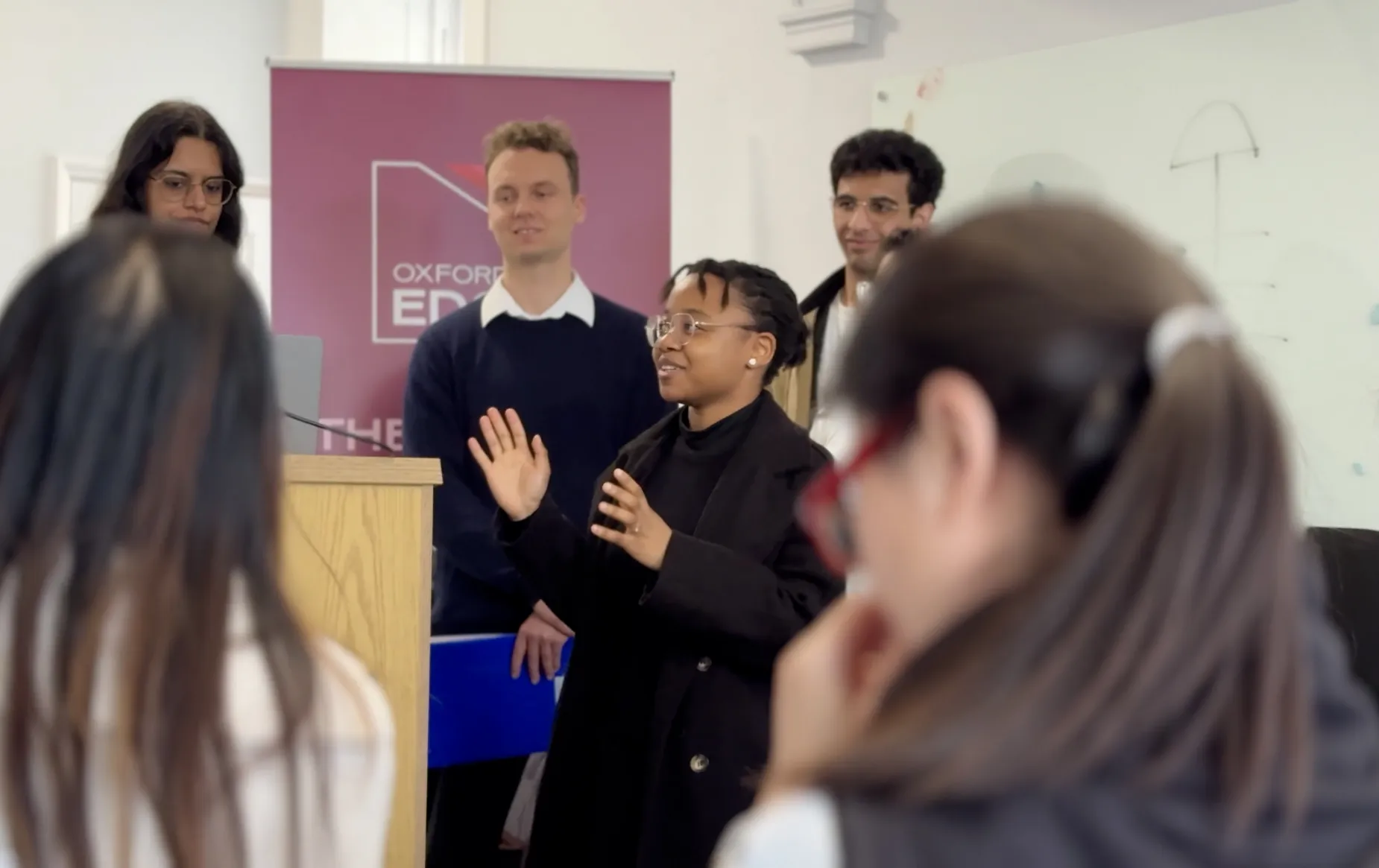
Attendees participating in a group session at Oxford Edge

Who is it for?

DPhil or Master’s students at Oxford. Integrated Masters - the fourth year of an undergraduate degree – are not eligible.

Apply here. The deadline for applications is 5 PM on Friday, 12 February 2026.

How does it run?

The programme kicks off on Wednesday, February 25 and ends on Wednesday, April 15.

The time commitment is only a few hours per week, though you are free to work on the challenges as much as you want! The challenges are designed with the potential to evolve into something greater, should the teams wish to take them further.

This is what happens:

  • Launch. The challenges are presented by domain experts at a launch event on Wednesday, February 25. Teams form around shared interests and complementary skill sets.
  • Collaborate. Over eight weeks, teams investigate the problem space, gather insights, test ideas, and build a practical, research-grounded output. There will be weekly check-ins to offer context, guidance, and advice.
  • Showcase. The programme concludes with a showcase on Wednesday, April 15 where teams present their solutions to invited assessors.
A group of participants attending an Edge workshop