Women and Their Books: Women as Book Producers and Owners in Early Modern England and Scotland
The recent acquisition of a sixteenth-century manuscript containing copies of Katherine Parr’s Praieres or meditacions (1545) and other devotional works prompted a new look at women as book producers and owners in early modern England and Scotland as represented in Christ Church Library’s collections.
In this study afternoon our speakers will explore the ways in which women and their books were part of devotional, intellectual, and cultural landscape and the material evidence of women’s book ownership and production.
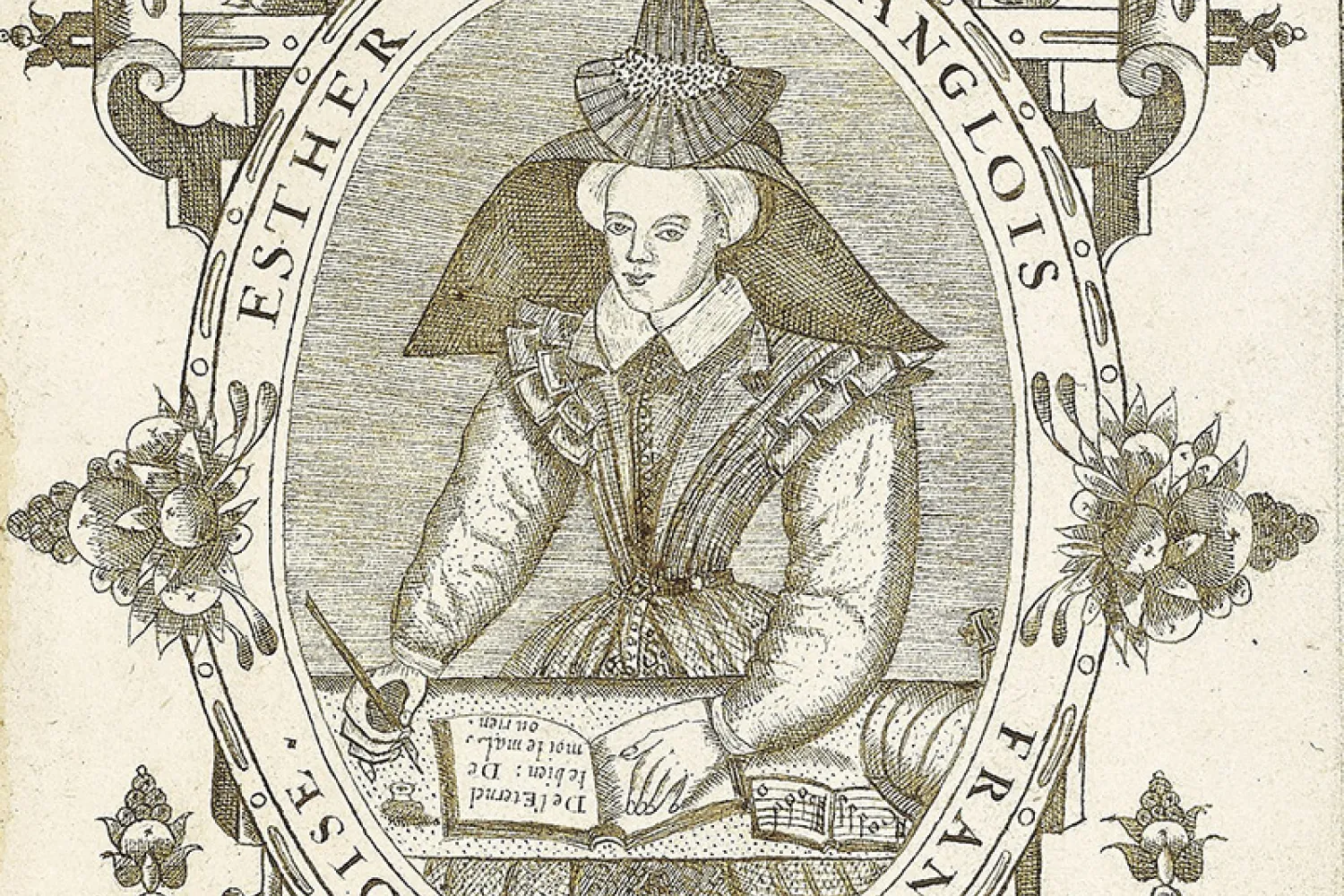
During the event there will be a chance to view a special display which includes a sixteenth-century manuscript containing copies of Katherine Parr’s Praieres or meditacions (1545) and other devotional works, a 1599 book of Psalms in French, written out in a large variety of scripts by the Franco-Scottish calligrapher Esther Inglis, and many other books and medical works donated to Christ Church in 1567 by Mildred Cecil, Lady Burghley.
Programme
10:30am: Registration and opportunity to see display
11.15am: Welcome
11.20am: Dr David Rundle (University of Kent), ‘Books and Women in Christ Church, Visible and Invisible’
12.10pm: Q&A with Dr David Rundle and Sophie Bacchus-Waterman
12.30-2pm: Lunch**
3.10pm: Q&A with Professor Tamara Atkin
3.30pm: Tea break
4.30pm: Anna-Nadine Pike (University of Kent), ‘“I have written in as many diverse styles as anyone else”’
5pm: Q&A with Dr Georgianna Ziegler and Anna-Nadine Pike
5.30pm: Summing up and drinks reception.
** Lunch is not provided but can be easily found in the city centre.
Abstracts
Paper 1: Books and Women in Christ Church, Visible and Invisible, Dr David Rundle
Most Oxford colleges were, in the early modern period as in the medieval, male-exclusive environments, while Christ Church was merely male-dominated. This brief talk will place in that wider context the role of women in book donations to Christ Church in the sixteenth and seventeenth centuries. It will consider the purpose of their engagement with such an institution.
Paper 2: A Queen’s Monogram?: The Boleyn Family and the Horenbout Workshop, Sophie Bacchus-Waterman
Anne Boleyn’s patronage of the Horenbout workshop has long been considered an important part of her queenship. This talk will contextualise this patronage within the patronage of other Boleyn family members and courtiers, and discuss Anne Boleyn’s potential involvement in the creation of another Horenbout manuscript which has hitherto gone overlooked.
Paper 3: Queen Katherine Parr’s Prayers or Meditations: Origins and Afterlife in CC MS 715, Micheline White
This talk will provide an overview of the unique religio-historical origins and devotional objectives of Katherine Parr’s Prayers or Meditations (1545), a work derived from Thomas à Kempis’ The Imitation of Christ. Although the original polemical objectives of Katherine’s work faded over time, MS 715 and other texts demonstrate that early modern subjects continued to use (and value) its contents as royally-authored “helps for devotion.”
Paper 4: ‘Christ Church MS 715: Some Unresolved Questions’, Professor Tamara Atkins
Written on thin, fine-textured vellum, and bound with luxurious velvet, Christ Church MS 715 contains incomplete copies of prayers and psalm paraphrases by both Katherine Parr and Richard Taverner that suggest it may have functioned as an exercise book for a young Tudor woman of noble status. However, there is much about this small book that remains unknown: Who was the ‘Edward Moseley’ who signed his name among its pages and what was his relationship with the scribe or scribes? What is source for the two ‘unidentified prayers’ on fols 17r and 18r and what light might they shed on the confessional position and social context of their copyist? Are there printed comparanda for the grotesques that appear in the illuminated capitals on fols 2r and 5r? What might such evidence add to our understanding of those involved in the making of this book? This paper approaches questions such as these and pinpoints avenues for future research.
Paper 5: Psalms Fit for a Queen: Esther Inglis's 1599 gift for Elizabeth I, Georgianna Zeigler
Focusing on Christ Church College MS 180, my talk will begin by briefly considering the historical moment for which this manuscript was made, and the involvement of Esther's husband, intelligencer Bartilmo Kello, in the ongoing overtures of King James VI to Queen Elizabeth. Then I will consider the overall design of the manuscript, with the relationship between embroidered binding and internal decoration. Finally I will discuss the particular resonance of the Psalms for the queen herself.
Paper 6: ‘“I have written in as many diverse styles as anyone else”’, Anna-Nadine Pike
This talk will set Esther Inglis’ 1599 Psalms for Elizabeth I (Christ Church MS 180) within their surrounding early modern scribal contexts, thinking through their relationship with wider manuscript and print traditions at this time. Looking then to other manuscripts produced by Inglis and by contemporary scribes, it will consider how the material form of these Psalms contributes to their experience of devotional reading, and how this compares to the reading of Christ Church MS 715.