How old is your immune system? Prof Dirk Aarts to lead £1m hunt for our "immune age"
Christ Church's Professor Dirk Aarts is one of the directors of a new £1 million research programme that aims to discover a person's "immune age" and use it to spot disease risk before symptoms appear.
The Oxford Martin Programme on Immune Ageing is one of four new interdisciplinary programmes announced by the Oxford Martin School, selected following a year-long open competition.
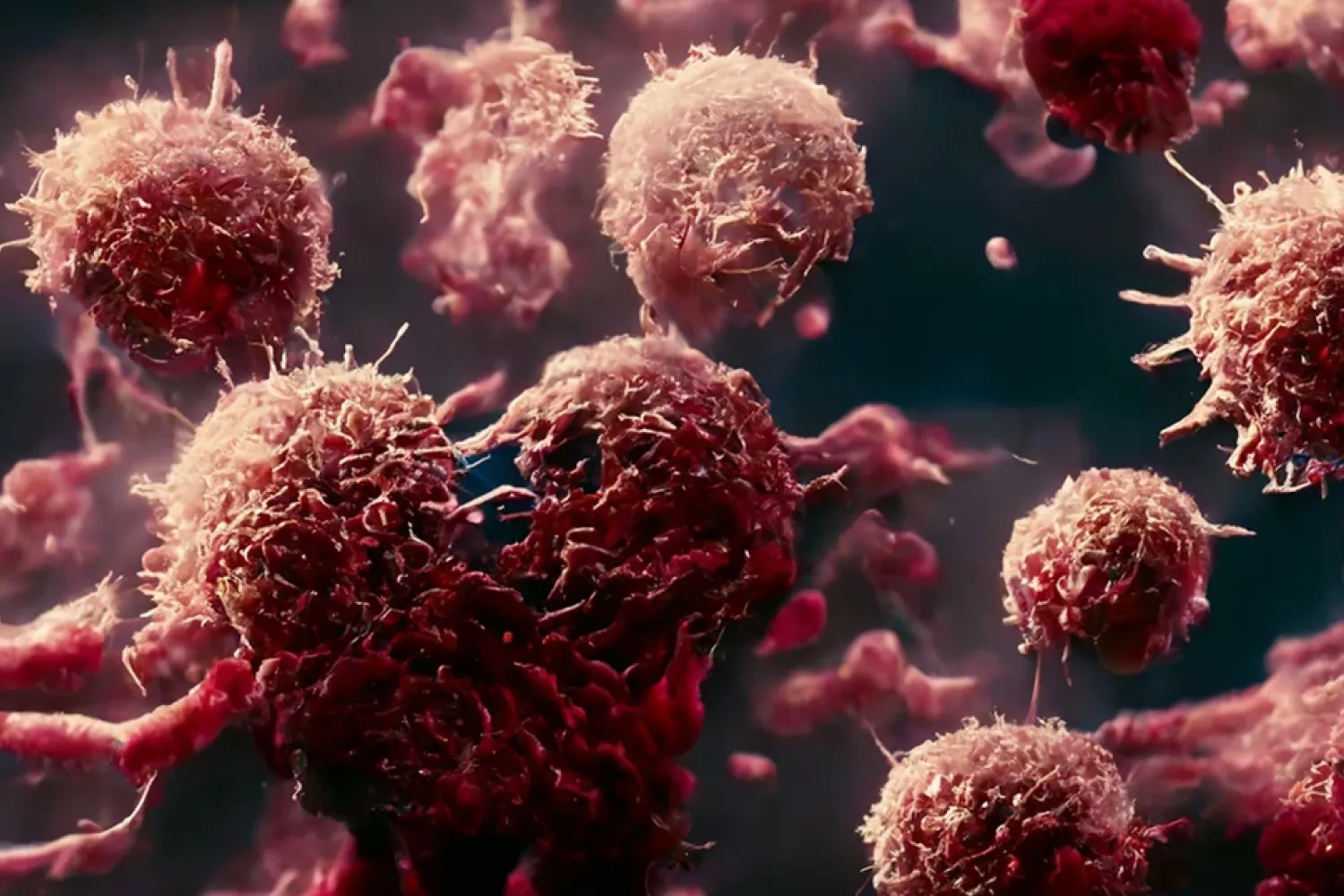
As we grow older, our immune systems become less effective, leaving us more vulnerable to infections and cancer and less responsive to vaccines. Ageing also affects men and women differently: women are more likely to develop autoimmune diseases, while men are more susceptible to some infections and cancers. Scientists still lack a detailed picture of how healthy immunity changes over a lifetime, or what drives these differences.
Part of the answer may lie in the receptors our immune cells use to recognise threats. Each of us carries millions of different versions, giving every person a highly individual immune profile that shifts with age. Until now, studying that diversity across large numbers of people has been prohibitively expensive.
The team has developed a new method that captures far more information at a fraction of the cost of existing commercial technology. The programme will use it to analyse millions of pairs of immune receptors from existing samples taken from healthy people across a wide range of ages, creating what would be the largest dataset of its kind.
The researchers will look for patterns linked to age and sex, and what they reveal about the decline in immune function over time. The findings could help explain why some people fight infection or respond to vaccines better than others, and why disease risk differs between men and women.
"Our immune systems change profoundly over a lifetime, yet we know surprisingly little about what healthy immune ageing looks like.
"Our immune systems change profoundly over a lifetime, yet we know surprisingly little about what healthy immune ageing looks like.
Professor Aarts, Tutorial Fellow in Chemistry at Christ Church and Professor of Chemistry at the University of Oxford, said: "Our immune systems change profoundly over a lifetime, yet we know surprisingly little about what healthy immune ageing looks like. Our new method lets us read the sequences of immune receptors at a scale and cost that simply weren't possible before. By studying millions of them across people of all ages, we hope to understand why some of us stay well for longer, and ultimately to give doctors a way to recognise risk much earlier."
The three other new programmes will investigate why the shift from fossil fuels to electricity is not happening faster, whether hydrogen for fertiliser could be produced cleanly by stimulating natural reactions underground, and whether compounds made by microscopic animals called bdelloid rotifers could provide safer antifungal treatments.
The Oxford Martin School funds bold, interdisciplinary research that could open new approaches to some of the world's most pressing problems.
Other Christ Church news