
Joram van Rheede awarded £1.95m EPSRC Open Fellowship
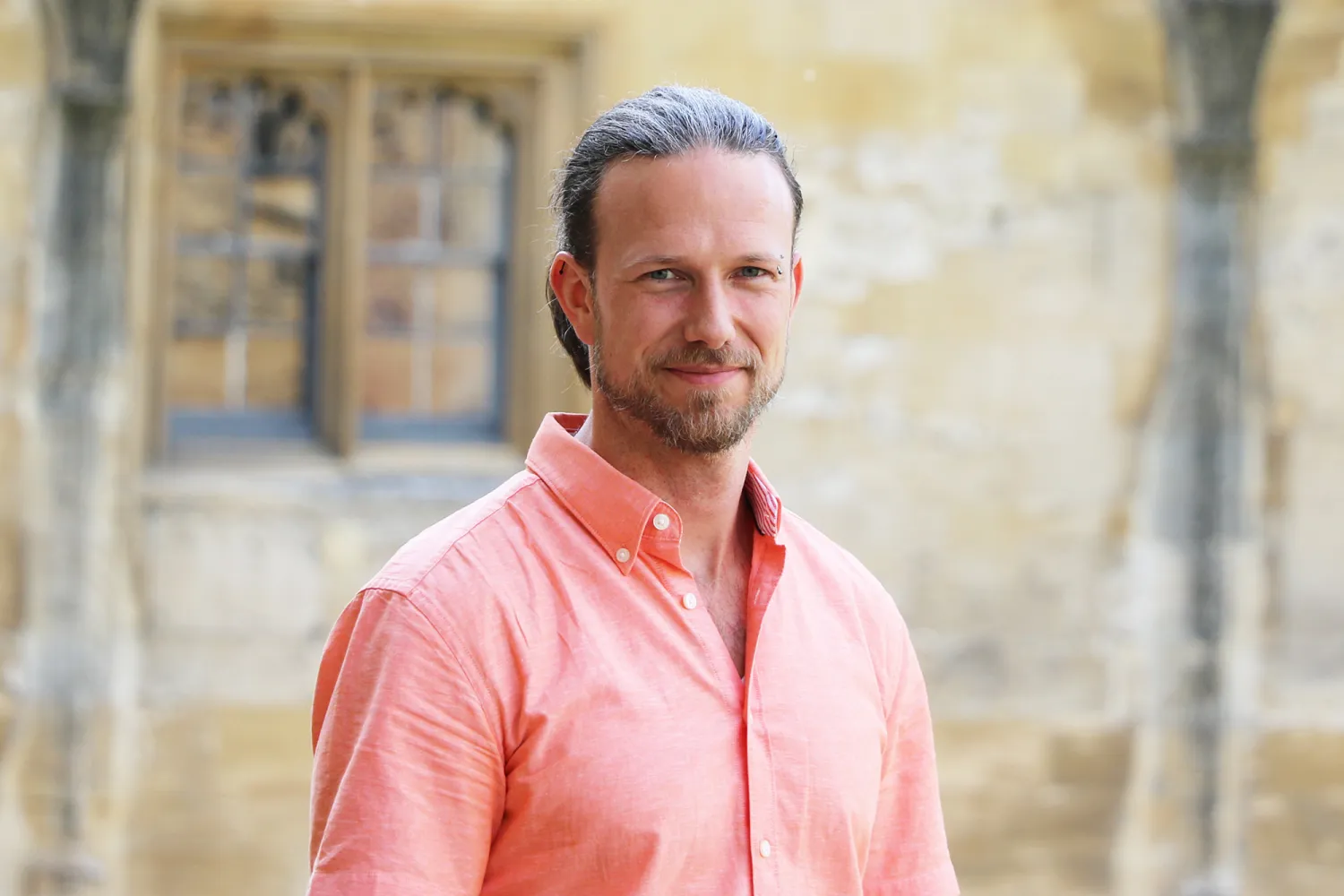
Christ Church’s Dr Joram van Rheede has been awarded a prestigious five-year EPSRC Open Fellowship worth over £1.95m to develop the next generation of ‘sleep-aware’ brain stimulation therapies – an important step towards smarter, more targeted treatments for neurological conditions.
Deep brain stimulation is an established therapy that has been used by more than 200,000 people worldwide to treat conditions such as Parkinson’s Disease and epilepsy. The therapy regulates abnormal brain activity through the delivery of electrical pulses by brain implants – devices that are sometimes described as ‘pacemakers for the brain’. Indeed, the technology itself evolved from cardiac pacemakers.
At present, however, most of these implants deliver the same electrical stimulation around the clock, regardless of whether a patient is awake or asleep. However, sleep fundamentally changes brain activity and plays a crucial role in wellbeing and long-term brain health. Poor sleep is common in neurological disorders and can even contribute to their progression. Still, the development and testing of stimulation settings and control algorithms has largely focused on waking hours alone. Dr van Rheede’s research aims to design implants that can detect when a patient is asleep and automatically adjust their stimulation accordingly – making treatment more responsive, more personalised and potentially more effective.
Dr van Rheede, who has been a Lecturer in Psychology at Christ Church since 2015, will begin his new Fellowship on 1 April 2026. The award, funded by the Engineering and Physical Sciences Research Council (EPSRC), will enable him to establish his own research group within Oxford’s Department of Engineering Science.
There is no excuse not to take sleep into account when developing brain stimulation therapy systems and algorithms.
There is no excuse not to take sleep into account when developing brain stimulation therapy systems and algorithms.
Over recent years, Dr van Rheede has worked with the MRC Brain Network Dynamics Unit and international collaborators to investigate how deep brain stimulation interacts with the sleep–wake cycle. His research has shown that key brain wave ‘biomarkers’ used in smart Parkinson’s therapies behave differently during sleep, that continuous stimulation can be associated with changes in sleep patterns, and that implanted devices may already contain sufficient information to detect sleep and distinguish its stages.
The new Fellowship will enable Dr van Rheede and his team to drive the development of ‘sleep-aware deep brain stimulation’. In collaboration with academic partners at Manchester Metropolitan University and UMC Utrecht in the Netherlands, and with industry partners Amber Therapeutics and MintNeuro, the programme will develop a new wireless brain stimulation device for 24/7 preclinical research. It will also implement sleep detection and sleep-dependent therapy adjustment in human implants.
Together, this work will lay the foundations for future preclinical therapy development and clinical trials of sleep-aware brain stimulation therapies – with the ultimate aim of improving quality of life for patients.
Dr van Rheede said: ‘Getting good sleep is key for brain health, and bad sleep is often a symptom of neurological conditions and can even drive their progression. Therefore, there is no excuse not to take sleep into account when developing brain stimulation therapy systems and algorithms. I am excited to start work on this project as it will provide a pathway for smart, sleep-aware therapies to reach patients.’
Joram van Rheede is a Lecturer in Psychology at Christ Church, University of Oxford. Learn more about his research via his Christ Church profile.
Other Christ Church news