
International Women’s Day 2026: research, justice and impact at Christ Church
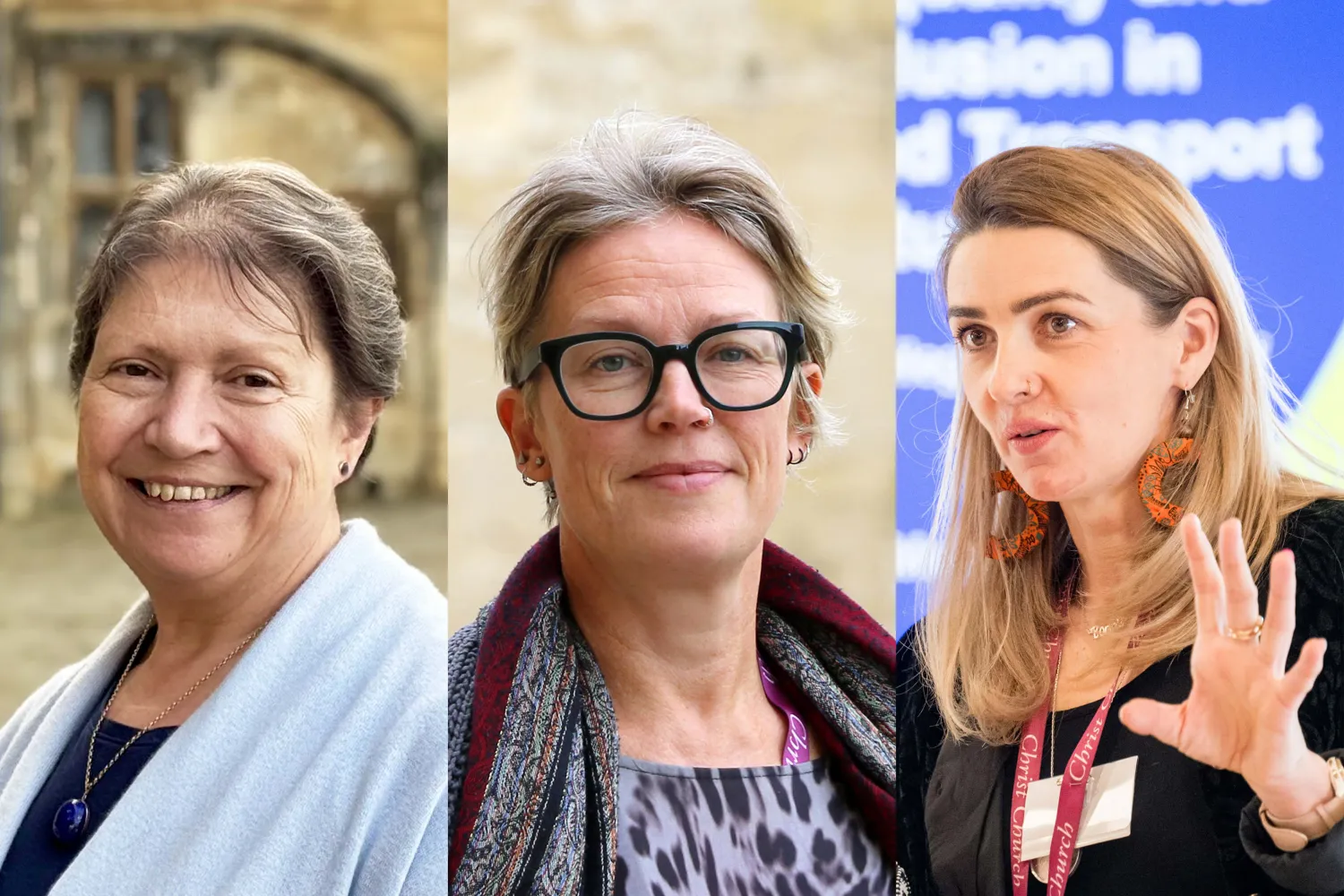
Ahead of International Women’s Day on Sunday 8 March, we celebrate the work of three Christ Church academics whose research not only advances knowledge in their fields, but places women, gender and equity at its centre.
Professor Sarah Rowland-Jones – women and HIV
Professor Sarah Rowland-Jones has worked in HIV research for over 35 years. As a junior doctor in London, she cared for some of the first patients admitted to hospital with AIDS. Her subsequent career has focused on understanding the immune responses required to develop an effective HIV vaccine.
Some of her earliest studies were conducted with cohorts of female sex workers in The Gambia and Kenya – women who were highly exposed to HIV yet remained HIV negative. Her team discovered that many of these women had T-cells capable of targeting HIV-infected cells, findings that helped shape vaccine research strategies still being pursued today. Later work with mothers living with HIV and their babies in Nairobi showed that some infants mounted protective T-cell responses associated with resistance to breastmilk transmission.
During her time as Research Director at the MRC laboratories in The Gambia, Professor Rowland-Jones led studies into how infant immune systems develop in the first two years of life. That research identified significant differences in how baby girls and boys respond to vaccines – findings that underscore the importance of sex-specific analysis in medical research.
Today, her group investigates the long-term comorbidities affecting adolescents and young adults who have survived perinatal HIV infection in Africa.
Yet for Professor Rowland-Jones, the story of HIV is also a story about gender inequality. More than half of people living with HIV globally are women, with particularly high rates of new infection among teenage girls and young women aged 15–24. These vulnerabilities are often linked to unequal sexual partnerships and intimate partner violence.
She warns that recent international aid cuts threaten services that have taken decades to build – particularly programmes preventing mother-to-child transmission, which have been central to the vision of an HIV-free generation.
Professor Rowland-Jones joined Christ Church in 1993 on a dedicated Junior Research Fellowship for medics and was later appointed to a Research Studentship – an appointment which, she notes wryly, increased the number of women on Governing Body by 50%.
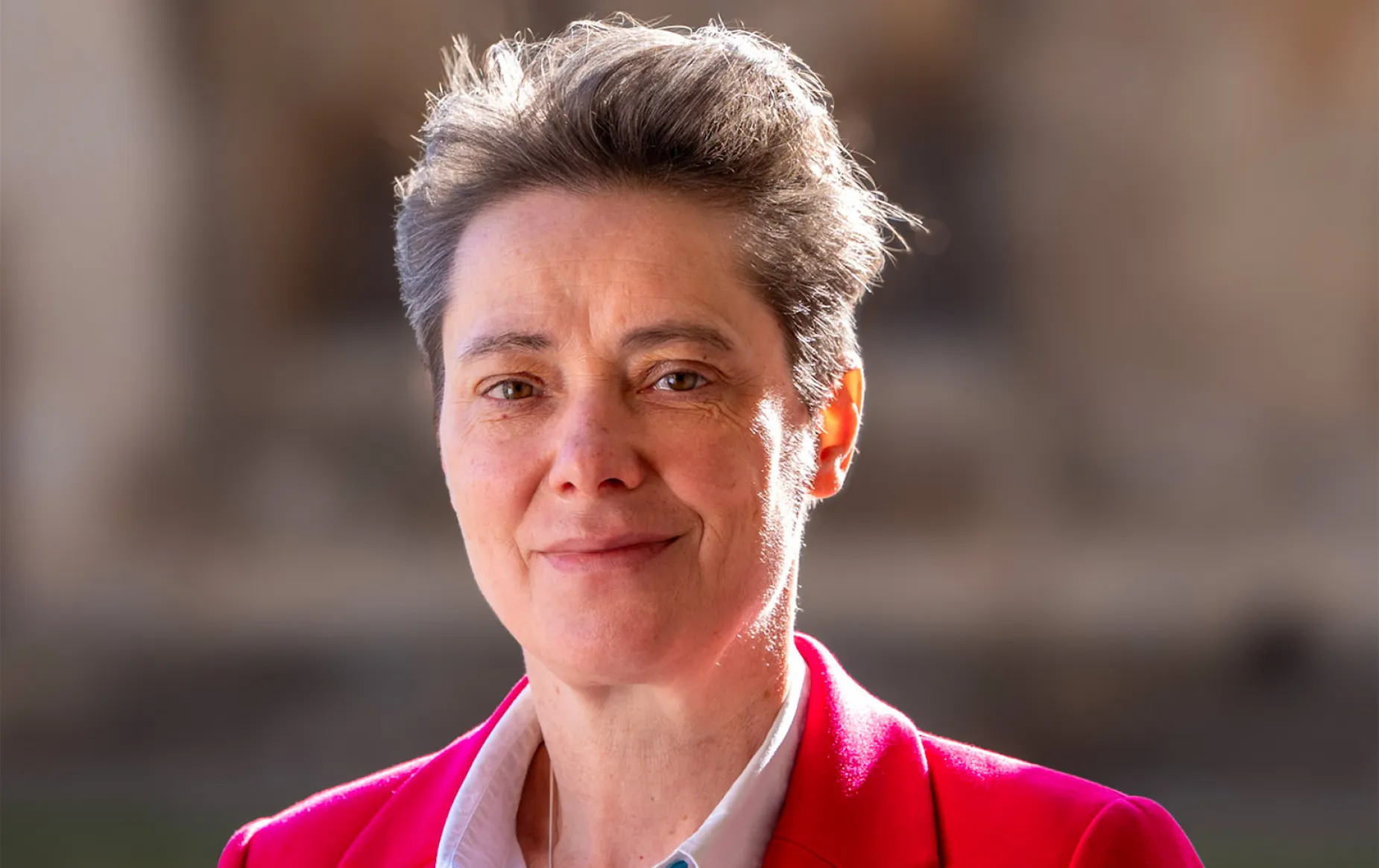
Professor Charlotte Ross – rethinking gender and kinship
Professor Charlotte Ross, a Cultural Studies scholar specialising in Italian culture and society, examines how identities – including gender and sexuality – are shaped within cultural environments saturated by competing discourses. Taking a socio-constructionist perspective, her work is grounded in Simone de Beauvoir’s famous insight that ‘One is not born, but rather becomes, a woman’.
A queer feminist scholar, Professor Ross explores how misogyny, homophobia and cisheteronormativity are embedded in law, political rhetoric and social institutions. Her research has ranged from analyses of literary representations of women’s experiences of misogyny, to studies of lesbian and queer solidarity networks in Italy, to critiques of gender politics under Berlusconi’s governments. She has also examined cultural discourses on lesbian desire in late nineteenth- and early twentieth-century Europe, bringing together sexology, erotica, feminist futurism and censorship history.
Her current work co-directing the interdisciplinary Queer Kinship Network investigates forms of family and affective bonds that move beyond heteronormative models – including friendships, activist communities and chosen families. She is also completing a book on queer Bildungsroman by women authors of the 1920s and 30s, whose protagonists critique the constraints of heterosexual marriage and imagine alternative ways of flourishing.
Looking ahead, Professor Ross plans further research on women who do not ‘fit’ within cisheteronormative systems and who narrativise their experiences of marginalisation. For her, such narratives are not merely literary artefacts but part of a broader strategy to create space for women’s independence, self-confidence and self-determination.
High-profile cases […] show that violence against women and girls remains deeply entrenched in our enduringly patriarchal culture, both among powerful elites and apparently ‘normal’, ‘family’ men.
High-profile cases […] show that violence against women and girls remains deeply entrenched in our enduringly patriarchal culture, both among powerful elites and apparently ‘normal’, ‘family’ men.
‘There are now many women in prominent leadership roles, and conversations on feminist issues continue to develop globally,’ she reflects. ‘However high-profile cases, such the brave testimony of Gisèle Pelicot against her husband and the many other perpetrators who abused her, or the disturbing revelations of the Epstein files, show that violence against women and girls remains deeply entrenched in our enduringly patriarchal culture, both among powerful elites and apparently “normal”, “family” men.’
‘We must continue to fight against this, and the perpetrators must be held to account. We also need different conversations with boys and men about masculinity: the model of misogynist, dominant masculinity is harmful to everyone, including those who embody it.’
Professor Stephanie Hirmer – gender justice in the energy transition
Professor Stephanie Hirmer, Associate Professor of Just Energy Systems, works at the intersection of engineering, sustainable development and social justice. Her research examines how infrastructure – particularly energy systems – can be designed and located to maximise development benefits while minimising social and environmental harm.
With nearly two decades of experience in energy access, including early work developing off-grid systems in rural Uganda, Professor Hirmer began her career designing and delivering rural electrification projects. She saw first-hand how electricity can transform daily life – powering clinics, schools and small businesses – but also how projects conceived without meaningful community participation can entrench inequality. Women’s perspectives, in particular, were frequently absent from planning processes, despite their central role in household energy use and care work.
These experiences shaped her academic trajectory. Today, Professor Hirmer combines participatory research methods – working directly with communities to understand local priorities and vulnerabilities – with advanced engineering and geospatial modelling. Increasingly, her team uses AI- and machine-learning-enabled decision-support tools to help governments design infrastructure pathways aligned with local priorities and environmental safeguards.
At the heart of her work lies a fundamental question: who benefits from infrastructure investment, and who bears its costs? For Professor Hirmer, this is not only a technical or planning issue, but a justice issue that shapes people’s daily lives in ways that are often invisible in high-level planning decisions.
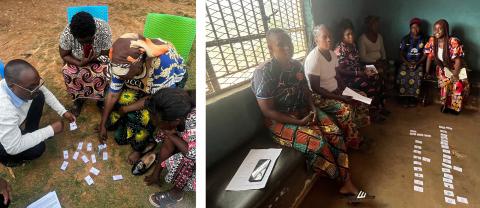
One strand of her current work examines the gendered social and environmental impacts of large-scale copper mining in Zambia, part of the global push to secure critical minerals for decarbonisation. While mining expansion brings economic opportunity, its costs – including environmental degradation, contaminated water sources and air pollution – are not experienced equally. Women and children are often disproportionately affected, particularly where polluted water sources and degraded land directly undermine household health and livelihoods.
Infrastructure that neglects the needs of women is infrastructure that has failed.
Infrastructure that neglects the needs of women is infrastructure that has failed.
Through interviews and focus groups with women in established and newly developed mining regions, combined with geospatial analysis, Professor Hirmer’s team maps patterns of inequality and develops indices of risk. The goal is not only documentation, but policy change – informing gender-responsive mining regulation and strengthening women’s representation in decision-making.
‘Infrastructure that neglects the needs of women is infrastructure that has failed,’ she argues. ‘It only delivers on its promise when it serves those it is intended to serve. Making those costs visible is a research gap we can no longer afford to ignore.’
For Professor Hirmer, a just energy transition is not simply about decarbonisation. It is about ensuring that the shift to a low-carbon economy does not reproduce historic inequalities. At a time of constrained development finance and accelerating climate urgency, embedding equity into infrastructure planning from the outset is not an optional addition but a prerequisite for durable and just transition.
Learn more about the latest research of our academics via our Research page.
Other Christ Church news